
What to Wear Delivering in Cold Weather: A Gear Breakdown by Temperature
Winter Prep · Gear Guide
What to Wear Delivering in Cold Weather: A Gear Breakdown by Temperature
The right layer at 50°F is the wrong layer at 15°F. Here's exactly what to wear at each stage of the cold so you're not guessing when the forecast drops.
I hear this every fall: someone's still wearing the same hoodie they wore in October, it's now 28 degrees at 6pm, and they're miserable by their fifth stop. Cold-weather gear isn't one jacket you throw on and forget about — it's a system that has to change as the temperature actually drops, and most drivers get burned because they don't know where the real breakpoints are. You either freeze because you didn't adjust, or you overdress in October and sweat through your base layer for no reason.
Here's the actual breakdown, temperature range by temperature range — no fluff, just what works at each stage.
This range fools people every single year. Standing still, it feels fine. Thirty-plus minutes on a bike or scooter, or in and out of a car in the wind, and it's a completely different story.
- A long-sleeve base layer under your regular jacket — moisture-wicking matters more than warmth here
- A light windbreaker if you're on a bike or scooter — wind cuts through more than the cold air itself
- Regular sneakers are still fine, but swap in wool or synthetic socks over cotton — cotton holds moisture and turns cold fast
One jacket won't cut it once you're stopping and starting all shift long. This is exactly where the classic 3-layer system earns its keep.
- Base layer: thermal long-sleeve or moisture-wicking compression layer against skin
- Mid layer: fleece or lightweight insulated layer doing the actual warmth retention
- Outer layer: a wind- and water-resistant shell — this is the layer fighting wind chill
- Insulated gloves with touchscreen-compatible fingertips — you're checking your phone constantly, don't strip gloves off every time
- A beanie or something covering your ears — most heat loss on foot deliveries happens through your head
Below freezing, you're also losing daylight fast — more of your shift is happening in the dark on top of the cold. This is where cold-weather gear and visibility gear start overlapping, and drivers who only think about warmth miss it.
- Insulated, waterproof boots — wet feet in this range ends shifts early, every time
- A heavier insulated parka or shell actually rated for sub-freezing temps, not just "water-resistant" marketing copy
- Disposable hand warmers tucked into gloves or pockets for foot deliveries
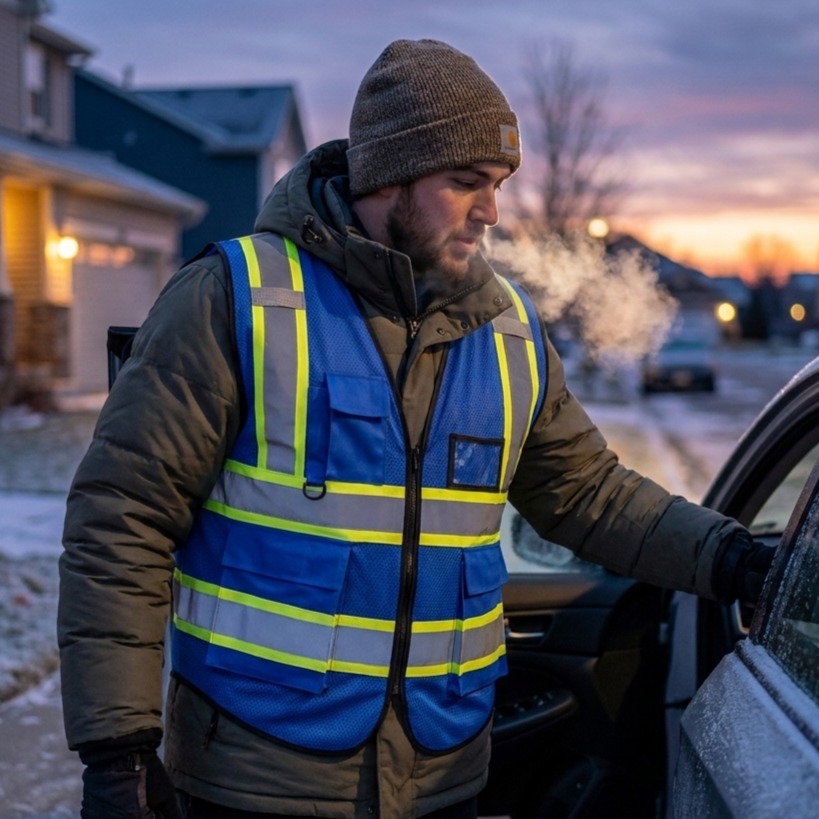
- A reflective, high-visibility layer over your jacket — winter coats run dark, and with sunset creeping earlier, staying visible to traffic matters as much as staying warm
- A neck gaiter or balaclava for wind cutting through on bike or scooter routes
Custom Delivery Driver Reflective Safety Vest
Reflective striping to keep you visible to traffic once the sun's down before your shift ends. Layer it right over your winter coat — multiple pockets, adjustable fit, fully customizable so it works with whatever you're already wearing.
See the VestAt this point it's not about comfort anymore. It's about how long you can safely stay outside the car or off the bike between drops.
- Insulated bibs or thermal pants under regular pants — most drivers skip leg layering and regret it by hour three
- Heavyweight mittens over gloves for anything beyond a quick door drop — mittens hold heat better than individual fingers ever will
- Face coverage (balaclava or ski mask) if you're spending any real time outside the vehicle
- Keep hand and toe warmers stocked in the car — don't wait until you're already cold to dig for a pack
- Where you can, shorten the walk per stop — park closer, cut extra steps in this range
The One Mistake That Wrecks Every Other Layer
Cotton. It's the single most common cold-weather mistake I see, and it undoes every smart layering choice you've made otherwise. Cotton holds sweat against your skin, and once it's damp it stops insulating and starts pulling heat straight off your body. Base layers and socks especially need to be wool, fleece, or synthetic — save cotton for anything that never touches skin directly, if you use it at all.
Bottom Line
Cold-weather gear isn't about buying the single warmest jacket on the shelf — it's having the right combination for the actual temperature you're driving in that day, and adjusting as the season gets colder. What gets you through November won't cut it in January, and overdressing in October just means sweating through your base layer by stop three. Build it in layers, add visibility gear as the daylight shortens, and swap pieces in as the thermometer drops instead of waiting until you're already freezing to fix it.
This post contains affiliate links. If you buy through them, GigWorldToday may earn a commission at no extra cost to you.
Want More Weekly Operator Tips?
Get strategies to boost earnings delivered to your inbox.