
2026 Gig Delivery Reality: Why Drivers Are Working More but Earning Less — And How to Take Back Control
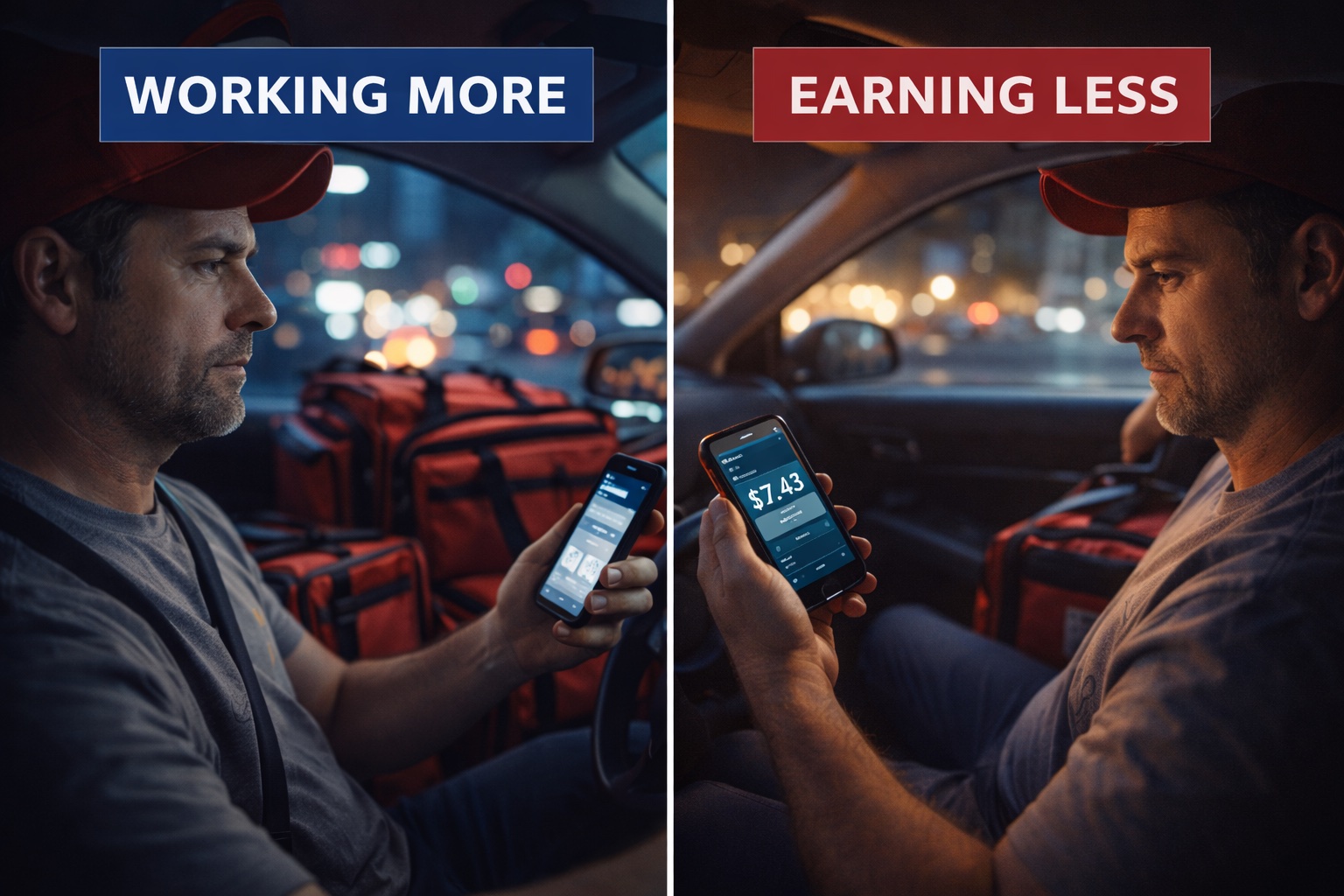
If you deliver people, food, groceries, packages, or catering orders in 2026, you’ve probably felt it.
More hours online.
More miles driven.
Less take-home pay.
Across rideshare, food delivery, grocery shopping, and parcel services, drivers are seeing tighter margins, harder-to-hit incentives, and more competition.
The structure has shifted.
But you are not powerless inside it.
Let’s break down what’s happening — and what actually works now.
What’s Changed in 2026
Lower Effective Pay
Upfront pricing has transferred more risk to drivers.
You see the payout — but you absorb:
- Traffic delays
- Long pickups
- Multi-stop complexity
- Store wait times
- Difficult drop-offs
Base rates in many markets have compressed quietly. The only number that really matters now is your effective earnings per mile and per hour.
Oversaturation
More drivers mean:
- Less surge
- Longer idle time
- Lower-quality offers
Platforms prioritize coverage — meaning enough drivers available — not necessarily maximizing your income.
Incentive Pressure
Bonuses and quests now often require:
- High acceptance rates
- Consecutive trips
- Longer shifts
Drivers end up chasing incentives that may not actually improve profitability.
So what’s the move?
Discipline.
Differentiation.
And strategic positioning.
Part 1: Protect Yourself With Smarter Strategy
Track Real Metrics
Stop thinking in “hours online.”
Track:
- Earnings per mile
- Earnings per active hour
- Idle time
- Deadhead miles
- Total operating costs
If you don’t know your real numbers, you’re guessing.
And guessing doesn’t work in compressed markets.
Be Selective — But Strategic
Decline:
- Long pickups with weak payouts
- Multi-stop orders that don’t compensate
- Incentive traps that require low-profit trips
Working more is not the answer.
Working smarter is.
Keep Your Stats High
This is critical.
On many platforms, your access to higher-quality offers depends on your performance metrics.
That includes:
- Acceptance rate (where applicable)
- Completion rate
- On-time performance
- Customer ratings
High stats don’t magically fix low base pay — but they can increase eligibility for:
- Priority dispatch
- Higher-value catering or large orders
- Early access scheduling
- Premium tiers
If you’re in a tiered system, treat your stats like an asset.
Protect your completion rate.
Communicate professionally.
Avoid unnecessary cancellations.
In tighter markets, small statistical advantages matter.
Shift Geography
Oversaturation often clusters in dense downtown cores.
Test:
- Suburban areas
- Event-based driving
- Airport runs (if profitable)
- High-income residential zones
Driver density isn’t evenly distributed. You don’t have to compete where everyone else is parked.
Part 2: Differentiate With Service (Where Tips Matter Most)
When pay compresses, tips matter more.
And tips are influenced by experience.
Let Your Personality Show
You are not just transporting goods or passengers.
You’re interacting with people.
Smile.
Be calm.
Make eye contact.
Speak clearly.
Energy affects perception.
People tip people — not apps.
Increase Personal Interaction (When Appropriate)
Small touches matter:
- Send a short introduction text
- Confirm unclear instructions
- Update customers if delays happen
- Choose hand-to-hand delivery when possible
A simple message like:
“Hi! I’m on the way with your order — should be there in about 10 minutes.”
Builds trust immediately.
Trust increases tips.
Stay Organized and Professional
Use hot bags.
Separate orders clearly.
Handle groceries carefully.
Protect drinks properly.
Customers notice professionalism.
Most drivers rush.
Calm and organized stands out.
Part 3: Address the Bigger Picture
Individual discipline helps.
But systemic compression requires collective awareness.
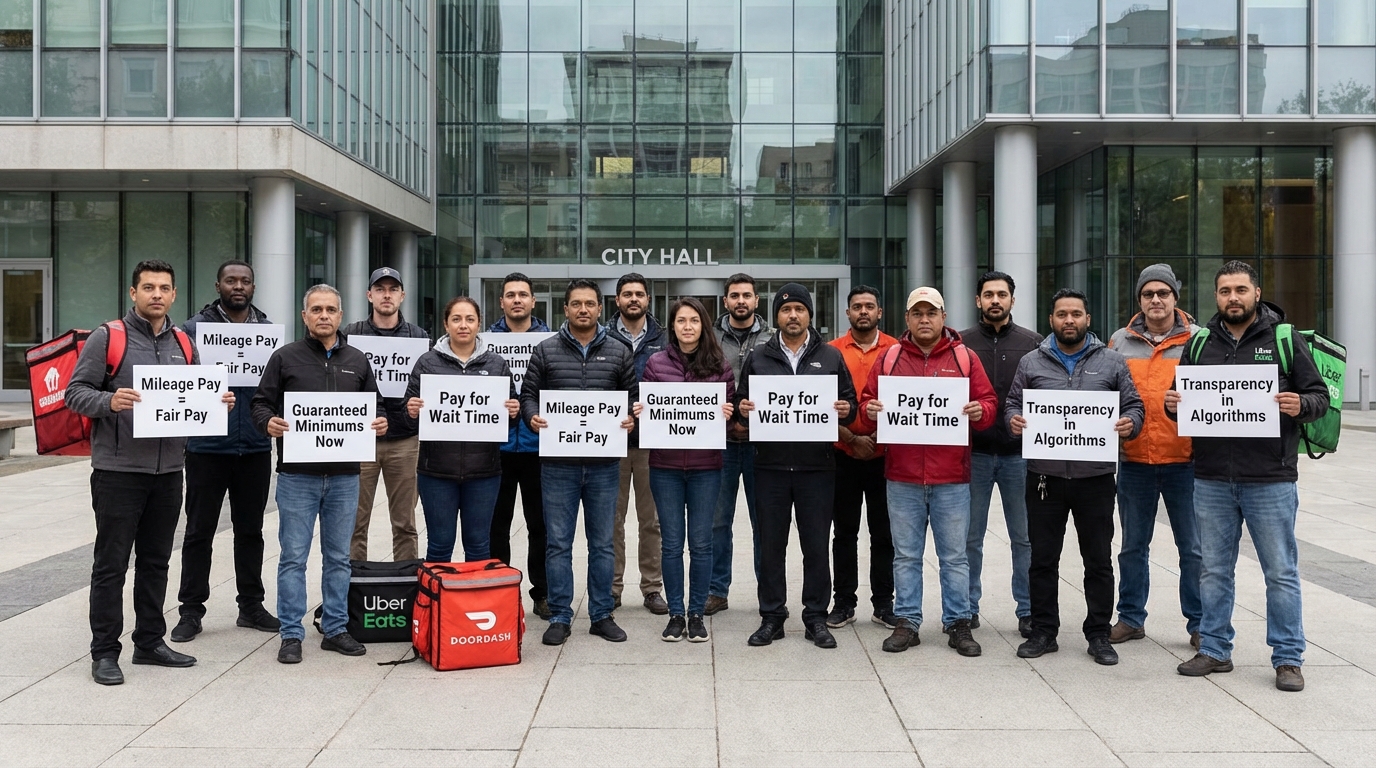
Cities like New York City and Seattle have implemented minimum pay standards for gig drivers.
That didn’t happen randomly.
Drivers organized.
Data was presented.
Policy was pushed.
Organize — Don’t Just Vent
If drivers want:
- Minimum pay floors
- Compensation for wait time
- Algorithm transparency
- Deactivation protections
They need structure.
Join local associations.
Present documented earnings data.
Engage policymakers professionally.
Policy responds to evidence — not frustration alone.
The Balanced Strategy for 2026
Short term:
Track smarter.
Keep your stats high.
Choose better orders.
Increase tips through professionalism and personality.
Long term:
Support fair standards.
Encourage structured advocacy.
Push for transparency.
You need both.
One protects your income today.
The other protects the industry tomorrow.
Final Thought
Gig delivery in 2026 is tighter.
Margins are thinner.
Competition is higher.
Algorithms are smarter.
But disciplined, professional drivers still win.
And if you want to go deeper into providing exceptional service, protecting your stats, making smarter decisions, and building a long-term system that works, I break all of that down in How to Be a 5-Star Gig Worker.
Because this isn’t random work.
There’s a system behind it.
The drivers who understand that system earn more — and stress less.
If you want next, we can:
• Tighten the hook to be more emotionally compelling
• Create a strong feature image set
• Or optimize this for search around “minimum pay” and “oversaturation”
What direction do you want to refine?
Want More Weekly Operator Tips?
Get strategies to boost earnings delivered to your inbox.